
Introduction
Security vulnerabilities can lead to data breaches, financial losses, and damaged reputation. This guide covers the five most critical secure coding practices for modern web applications built with Node.js, Vue.js, and MySQL.
Key Secure Coding Practices
- Prevent SQL Injection with Parameterized Queries
- Implement Strong Authentication
- Secure Configuration & Environment Management
- Input Validation
- Secure Logging
Prevent SQL Injection with Parameterized Queries
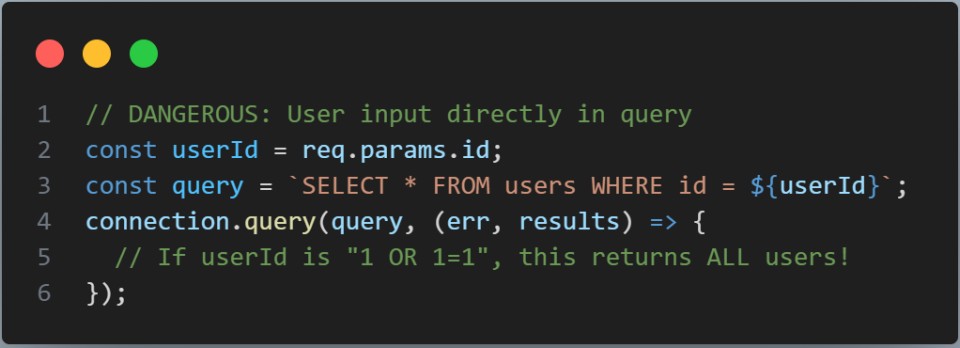
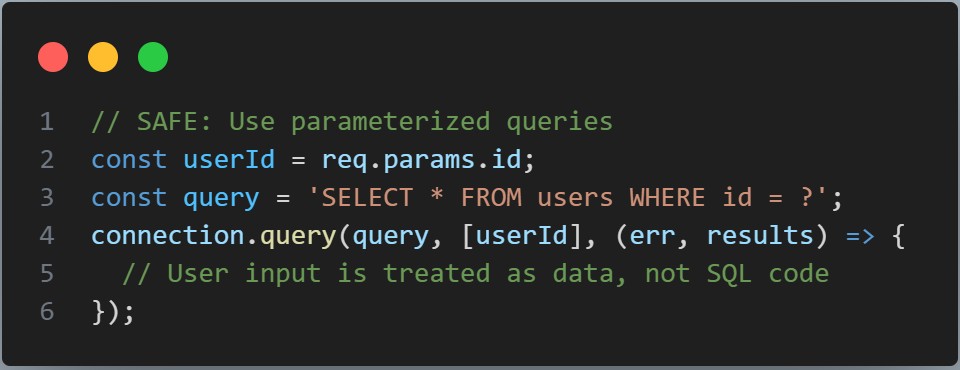
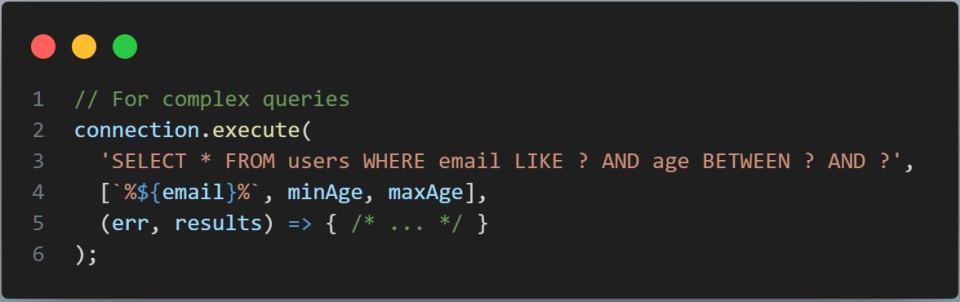
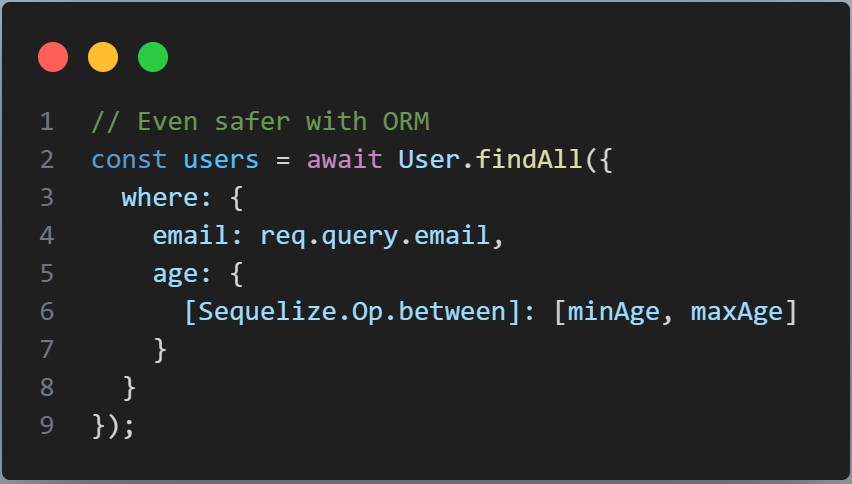
SQL injection is one of the most dangerous vulnerabilities. Never concatenate user input directly into SQL queries. Always use ? placeholders or ORM methods. Never use template literals or string concatenation with user input in SQL queries.
❌ Vulnerable Code:
✅ Secure Code:
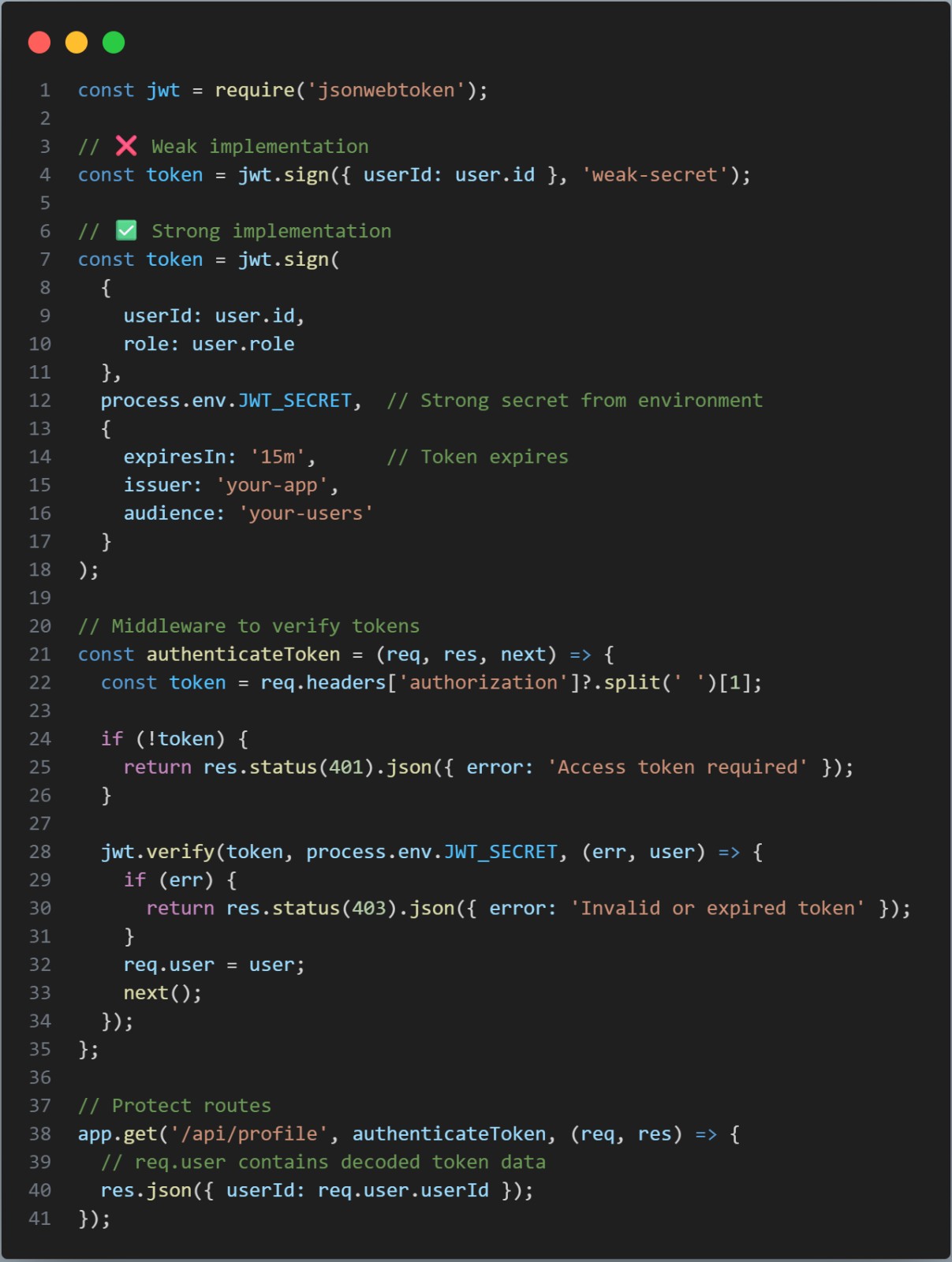
Implement Strong Authentication
Weak authentication is a primary entry point for attackers. Implement secure token-based authentication with proper expiration and password hashing. Always use hashed passwords and JWT with expiration.
Secure Configuration & Environment Management
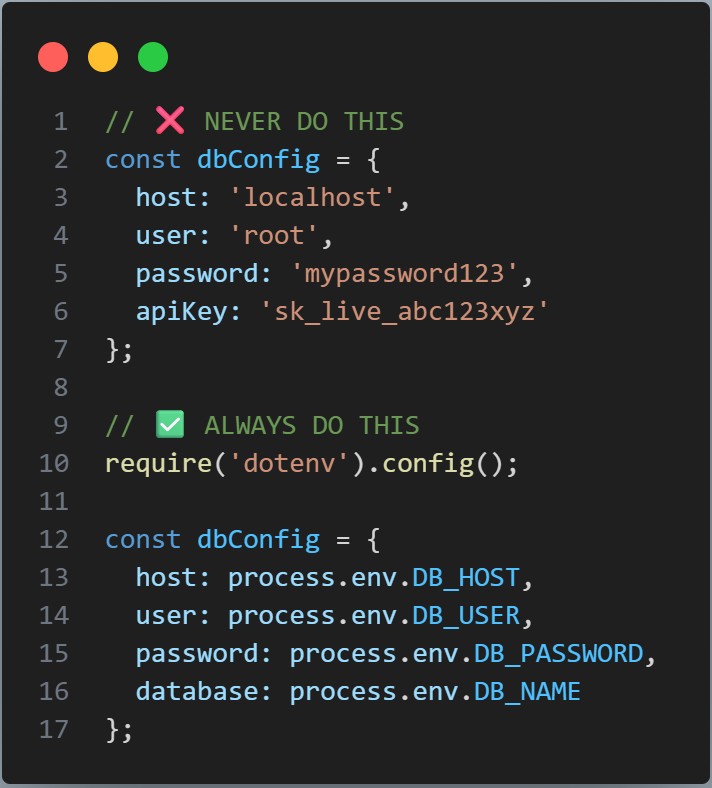
Never hardcode secrets. Use environment variables and implement security best practices for production deployment.
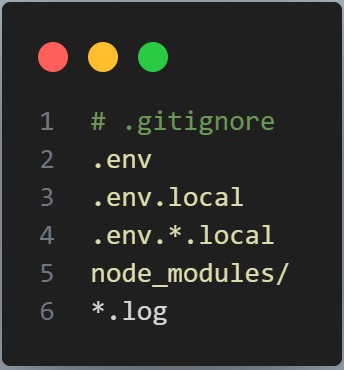
Never commit .env File to Git.
Input Validation
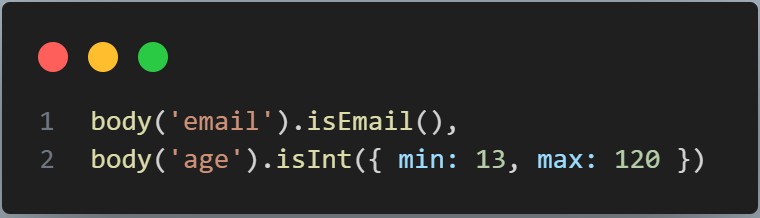
Every input from users should be validated as if you're a bouncer at a club checking credentials. Never trust user input without verification.
Consider an age input field:
- Valid: "25" ✓
- Invalid: "-5" (negative age)
- Invalid: "SELECT * FROM users" (SQL injection attempt)
- Invalid: "999999999999" (unrealistic value)
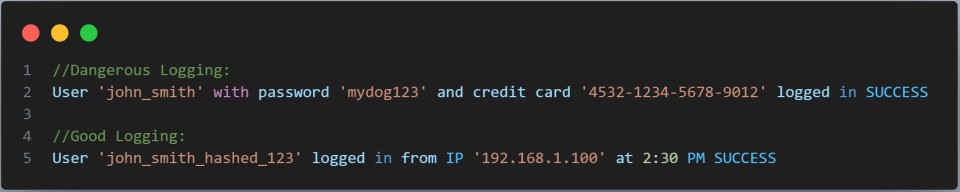
Secure Logging
Logs are like security camera systems—they should record important events without capturing sensitive information like passwords or credit card numbers.
Never log: Passwords, credit card numbers, social security numbers, authentication tokens, or other sensitive personal information.
Conclusion
Security is not a one-time implementation but a continuous practice that must be integrated into every stage of development. By following these five fundamental principles—preventing SQL injection, implementing strong authentication, managing configurations securely, validating inputs rigorously, and logging responsibly—you create a robust defense against the most common and dangerous security threats.
Remember these key points:
- SQL Injection remains one of the top threats, always use parameterized queries
- Authentication is your first line of defense, never compromise on password hashing and token security
- Configuration secrets must never be hardcoded, use environment variables consistently
- Input validation on both frontend and backend prevents malicious data from entering your system
- Secure logging helps you monitor threats without exposing sensitive information
The cost of preventing a security breach is always lower than the cost of responding to one. Start implementing these practices today, make security reviews part of your code review process, and foster a security-first culture in your team.
Security is everyone's responsibility—from developers writing code to testers verifying it. Build it right from day one.